
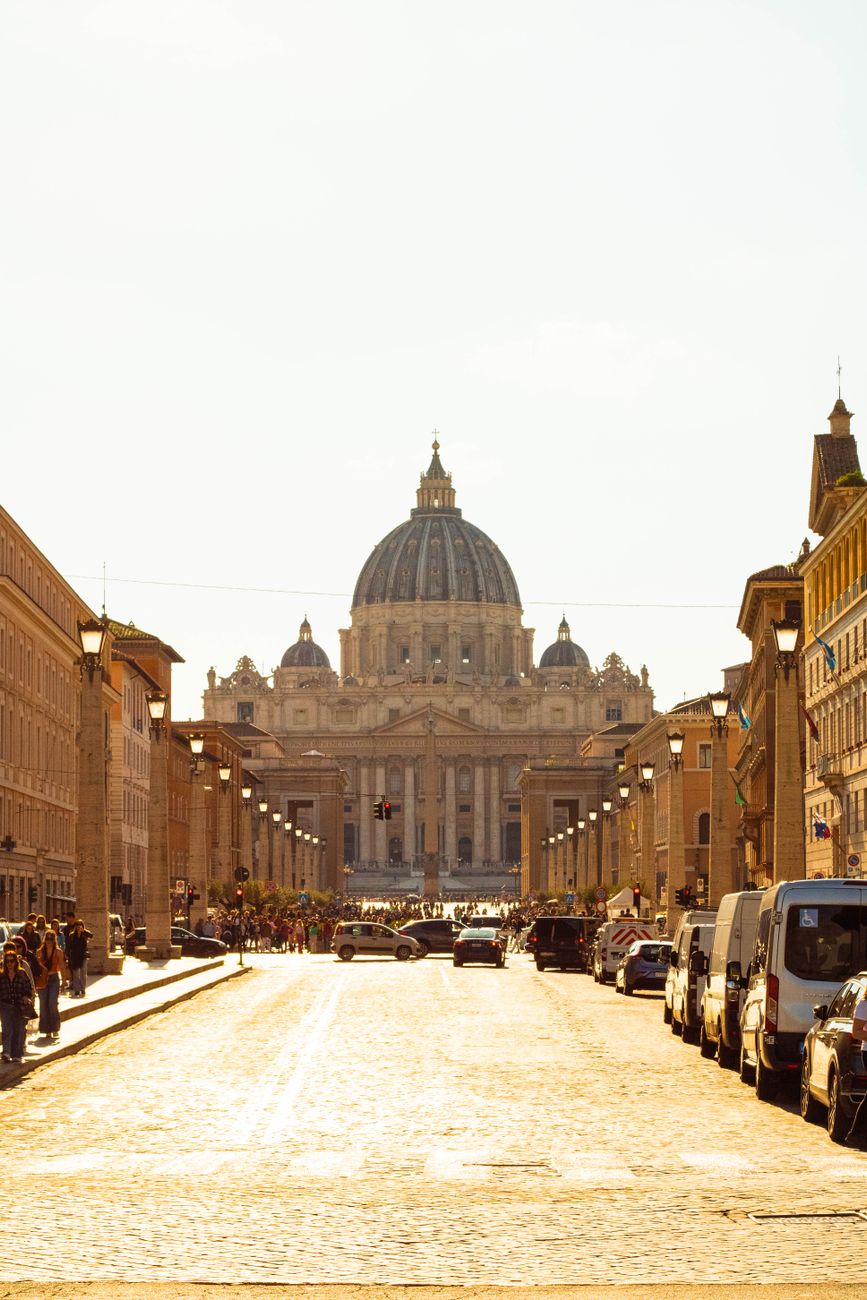
Rome doesn’t do subtle. It’s the city where you can eat the best carbonara of your life, stumble into a 2,000-year-old ruin on your way to get coffee, and watch the sunset turn the Colosseum gold — all before dinner (which, by the way, doesn’t start until 8pm, so pace yourself). It’s chaotic, it’s loud, it’s a little bit of a mess in the best way, and it will absolutely ruin every other “historic city” for you afterward.
This guide covers everything — when to go, how to get around, where to stay, what to actually prioritize (because you will not see all of Rome in one trip, and that’s fine), and where to eat like you live there. Andiamo.


Rome Weather by Season
Rome has hot, dry summers and mild, wet winters — but as a city built for walking, the shoulder seasons matter here more than almost anywhere else in Italy.
- Spring (April–May): Mild and pleasant, 15–22°C, with everything in bloom and manageable crowds (except around Easter, which gets busy). Arguably the best time to visit Rome.
- Summer (June–August): Hot, often brutally so — temperatures regularly hit 33–36°C, and much of the city has little shade. August also sees many local businesses close as Romans head to the coast (ferragosto).
- Autumn (September–October): Warm days easing into the low-to-mid 20s°C, golden light, and noticeably fewer tourists by October — a strong contender for the best time to visit Rome.
- Winter (November–March): Mild by northern-European standards (8–14°C) but rainy. Fewer crowds at major sites and a genuinely magical, quieter version of the city — especially around Christmas.
Best time to visit Rome: April–May or late September–October. You get comfortable walking weather without the July/August heat (or the queues that come with peak season).


Getting To Rome
FLIGHTS – Rome is served by two airports: Fiumicino (FCO), the main international hub about 30km from the center, and Ciampino (CIA), used mostly by budget/regional carriers. I always compare prices first on Aviasales before booking — their smart filters make it easy to catch a cheaper fare a day or two either side of your dates.
TRAINS – If you’re combining Rome with other Italian cities, the high-speed rail network makes it painless: Florence (1.5 hrs), Naples (1 hr), Milan (3 hrs), Venice (3.5 hrs). I book all my Italian train tickets through Klook — one search, all the routes, no juggling multiple train company sites.
AIRPORT TRANSFER – Landed at Fiumicino after a long flight and don’t fancy hauling luggage onto a train? Book your transfer in advance with GetTransfer.com — compare fixed prices, vehicle types, and driver ratings before you pay, so there are no surprises when you land.
Getting Around Rome
Here’s the good news: Rome’s historic center is genuinely walkable, and honestly the best way to experience it — half the magic is stumbling onto something unplanned. That said, the city is bigger than it looks on a map, and your feet will thank you for mixing in the metro, buses, or the odd taxi.
If you’re planning day trips to Tivoli, Ostia Antica, or the surrounding countryside, renting a car makes life much easier — I always compare rental prices across local agencies with GetRentacar before picking one up.
Prefer to skip public transport logistics entirely and have a driver at your disposal for a day? A private tour through GetYourGuide covering the Appian Way or the Castelli Romani takes the planning off your plate.
Best Hotels in Rome
LUXURY
Rome does grandeur exceptionally well — think rooftop terraces with Colosseum or St. Peter’s views, converted palazzos, and properties near the Spanish Steps or Via Veneto with old-world glamour baked into every detail.
ROMANTIC
For couples, the Trastevere neighborhood is hard to beat — cobblestone streets, ivy-covered buildings, and boutique hotels with a genuinely romantic, lived-in feel that the more polished center can’t quite match.
FAMILY-FRIENDLY
Look for a base near (but not directly on top of) the major sights — areas like Monti or Prati offer easy access to the Colosseum and Vatican respectively, with a bit more breathing room and local, family-run restaurants nearby.
BUDGET
Staying just outside the historic center — near Termini station or in San Lorenzo — stretches your budget considerably further while keeping you a short metro ride from everything.
The Best Experiences in Rome
- Colosseum, Roman Forum & Palatine Hill skip-the-line tour — Book here. Non-negotiable — the walk-up queue can eat 2+ hours of your day.
- Vatican Museums & Sistine Chapel early access tour — Book here. Getting in before the crowds is the single best upgrade you can make to your Vatican visit.
- Roman cooking class — Book here. Learn to make fresh pasta and tiramisu from a local chef, then eat your homework.
- Trastevere food & wine walking tour — Book here. A guided crawl through Rome’s most atmospheric neighborhood, plates included.
- Tivoli day trip (Villa d’Este & Hadrian’s Villa) — Book here. Fountains, gardens, and Roman ruins just outside the city, without renting a car yourself.
Want to explore the historic center at your own pace, headphones in, no group to keep up with? Grab a self-guided audio tour with WeGoTrip covering the Pantheon, Trevi Fountain, and Piazza Navona.
Top Historical and Cultural Sites
THE COLOSSEUM & ROMAN FORUM
The single most recognizable ruin on Earth, and it genuinely lives up to the hype. Pair it with the Roman Forum and Palatine Hill (included in the same ticket) to walk through what was once the beating heart of the ancient world.
Book your Colosseum, Forum & Palatine Hill ticket here – tickets are timed and frequently sell out, so book ahead rather than risk it on the day.
VATICAN CITY
A separate country within Rome, and home to St. Peter’s Basilica, the Vatican Museums, and the Sistine Chapel. Budget a full morning or afternoon here — it’s bigger (and busier) than most people expect.
Book your Vatican Museums & Sistine Chapel ticket here to skip the notoriously long entrance queue.
THE PANTHEON
A near-perfectly preserved 2,000-year-old Roman temple, complete with the world’s largest unreinforced concrete dome and an oculus that lets rain fall straight onto the floor. Free to enter, but arrive early to beat the crowds.
TRASTEVERE
Rome’s most charming neighborhood — narrow cobblestone streets, ivy-draped buildings, and some of the city’s best trattorias. Best explored in the early evening, when the golden light hits the piazzas.
THE AVENTINE KEYHOLE (BUCO DELLA SERRATURA)
One of Rome’s best-kept secrets: peer through a small keyhole in a nondescript garden gate on the Aventine Hill, and you’ll see St. Peter’s dome perfectly framed through a tunnel of hedges. Free, quick, and almost nobody outside Rome knows about it.
Personalized Map

This Rome Map includes:
– Best lunch and dinner spots, from classic tratorias to fantastic veggie options!
– Hiking trails, parks, and hidden places.
– Cool coffee places, cafes, and delicious ice cream shops.
– Our favorite hidden gems and photo spots!
– Best markets and local shops.
– Historical sites, museums, and unique experiences.
– Great nightclubs and bars.
– Gyms, spas, and hotels.
– Free in-app updates.
– Lifetime access (meaning there’s no limit to using it).
Once you snag your treasure, get ready for the VIP treatment! We’ll shoot over an exclusive invite to dive into our private Google Maps Locations, accompanied by a breezy instruction manual to have you navigating like a pro.
Must-Visit Piazzas and Fountains
- Trevi Fountain — go at sunrise if you want a photo without 200 people in it. Toss a coin over your left shoulder with your right hand for good luck (and, allegedly, a return trip to Rome).
- Piazza Navona — a Baroque showpiece with Bernini’s Fountain of the Four Rivers at its center, ringed by cafés perfect for people-watching.
- Piazza di Spagna & the Spanish Steps — iconic, though note that sitting on the steps themselves is technically not allowed anymore.
- Campo de’ Fiori — a lively morning market square that turns into an aperitivo hotspot by evening.
Where to Eat in Rome
Roman cuisine is built around a handful of iconic, deceptively simple pasta dishes — get these right, and you’re eating better than 90% of tourists.
- Look for cacio e pepe, carbonara, amatriciana, and gricia — Rome’s four pasta pillars, and a genuinely good way to judge a restaurant.
- Trastevere is packed with excellent trattorias, but wander a street or two off the main drag to avoid the tourist-menu spots.
- Testaccio is Rome’s under-the-radar food neighborhood — less scenic than Trastevere, but where a lot of locals actually eat.
- Save room for a proper Roman-style pizza (thin, crispy, rectangular, sold by weight) from a pizza al taglio counter — perfect for lunch on the move.
Tips for Visiting Rome
TRAVEL INSURANCE – Nobody wants to think about the “what ifs” while planning a Roman getaway, but trust me, future-you will thank present-you. I sort my coverage through EKTA before every trip — quick to set up and one less thing to worry about while you’re chasing fountains.
STAY CONNECTED – Roaming charges are about as fun as a pickpocket on the metro. Skip them entirely with an eSIM from Yesim — install it before you land and you’ll have data (and maps) the moment you touch down.
LUGGAGE STORAGE – Got a late flight and an early checkout? Stash your bags safely with Radical Storage and spend your last hours exploring hands-free instead of hovering near a hotel lobby.
BOOK MAJOR SIGHTS IN ADVANCE – The Colosseum, Vatican Museums, and Galleria Borghese all sell out, sometimes days ahead in peak season. Book tickets before you land, not the morning of.
Frequently Asked Questions About Rome
How many days do you need in Rome? 4–5 days lets you comfortably cover the major sights plus a couple of neighborhoods at a relaxed pace. 3 days works if you prioritize ruthlessly, but you will need to skip things.
Is Rome worth visiting? Without question — it’s one of the few cities where you can walk from ancient Roman ruins to Renaissance masterpieces to a genuinely great plate of pasta, all within a few blocks.
Do you need a car in Rome? No — and you shouldn’t try. The historic center is walkable, public transport covers the rest, and Roman traffic is not for the faint of heart. A car is only useful for day trips outside the city.
What is the best month to visit Rome? April, May, September, and October offer the best balance of comfortable weather and manageable crowds.
Is Rome expensive? It can be around the major sights and in the historic center, but eating and staying a few streets away from the main tourist areas (Testaccio, San Lorenzo) stretches your budget considerably further.
Plan Your Rome Trip Now!
Between the ruins, the Renaissance, and the reason you’ll suddenly develop strong opinions about carbonara, Rome rewards a bit of upfront planning. Book your flights on Aviasales, sort your day-trip wheels with GetRentacar, lock in your Colosseum and Vatican tickets on GetYourGuide, and get your coverage sorted with EKTA before you go. Buon viaggio!


Leave a Reply